
Share This Article
“…I draw a sword against conspirators;
Julius Caesar, Act V scene I
When think you that the sword goes up again?”
The Digital Freedom Project’s High Court Challenge has the same vibe as a retreating dotcom garrison running some rearguard action in order to keep their platforms available to Australia’s youth.
This is eerily reminiscent of when Big Tobacco marched Bret Walker S.C. into the High Court in 2012, in a case centring on the constitutional right to ‘just terms’ in the acquisition of property. They argued the Gillard Government’s plain packaging laws – whilst in the interest of Australia – acquired and diminished their Intellectual Property. Their arguments were quickly done away with by then-Crown Solicitor Stephen Gageler. Two guesses why he’s now the Chief Justice. This was a prime example of large corporations attempting to blitzkrieg the battlefield after surrender.
Using the Australian Constitution to invalidate the whole law, when lobbying and exemptions failed, is exactly the kind of eleventh-hour tactics Australians should be aware of.
The Digital Freedom Project (led by New South Wales Senator John Ruddick) is seeking to invalidate the Commonwealth legislation on the grounds that it violates the Constitution to the extent that it encroaches on the inherent right Australians have to political communication.
Whilst both cases turned on different constitutional sections, the driving principle remains the same.
A constitutional challenge is akin to a DRS in cricket, which, if successful, will invalidate and undo federal laws.
Imagine the constitution as an agreement between the states and the federal government, under which the states get statehood (funny that) and the commonwealth gets the ability to make laws on certain areas (these are called heads of power). They are broad and sweeping, like the external affairs power, the defence power, etc. For example, the 2020 quarantine laws were intra vires of the quarantine power. In shorthand, federal laws must fit within a Constitutional power (1941 declaration of war within the Defence Power) in order to be valid. If the matter is taken to the High Court (with the Commonwealth Government as the respondent) and the Court finds that the law does not fit within a power, it is invalidated (to the extent that it matters here).
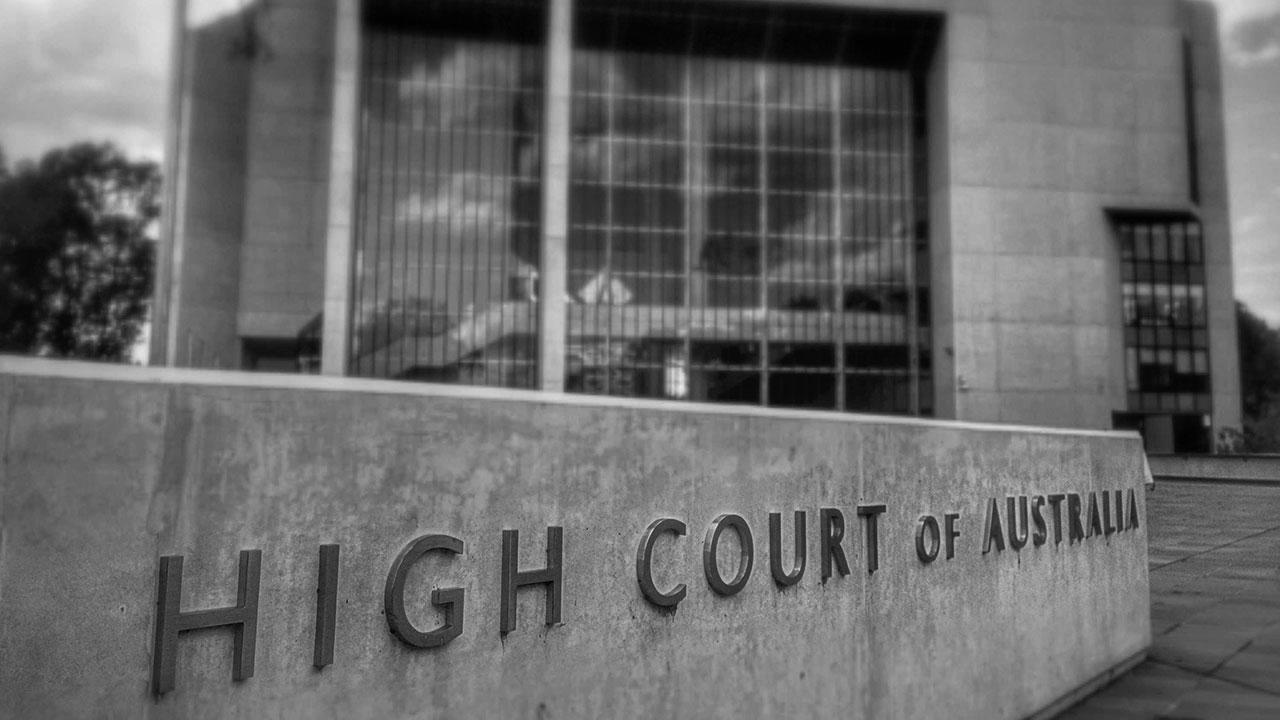
The Constitution only has a few viable sections that can be challenged, requiring any would-be challenger to employ crafty legal advocacy before the High Court. Under Section 76 (i) of the Australian Constitution, the High Court has original jurisdiction over constitutional challenges, meaning these matters are heard there first as opposed to being appealed up from the states’ courts. After all, the fifteen-year-old plaintiffs may have finished school by then.
To the crux of the challenge. Unlike the United States’ storied Bill of Rights, Australians do not typically have an express right to free speech. However, the Constitution implies (through Sections 7, 24, 64, 128) that free political communication is inherent and necessary to representative democracy, allowing Australians to communicate through almost any public medium and engage in lawful and meaningful debate, as was found in the Aus Party Communist Case. Importantly, the implied right is not actually an individual freehold right, like Native Title or the right to a Jury, but a legislative limitation on the Commonwealth. By incident only, Australians gain the right to discuss politics freely.
Correct my friends, the ‘implied right’ has nothing to do with how rights typically work (George Orwell would love this term).
At the time of writing, I am going to presume that the Digital Freedom Project may pull an argument surrounding a lack of social media access for teenagers, preventing them from politically communicating: a right they, although seldom use, inherently have. Ms Neyland, the plaintiff, holds the argument that ‘voters of tomorrow’ must remain politically informed, and without social media, that is greatly impacted. Ms Neyland will not have to be a voter of tomorrow until the 2028 election. Further, neutral political communication happens in a vast array of media beyond Social Media. What is really going on here?
Challenges like the above invite interesting discussions around the modern use of the constitution in relation to invalidating topical, and arguably radical, laws. In order to take a matter to court, a party must be directly affected by the matter in question. I greatly question whether these two fifteen-year-olds are actually aggrieved by this, or whether a powerful political group gave them a call akin to an episode of ‘Which talented future law students would like to see the inside of the High Court?’. Let’s say the two plaintiffs really are passionate about this. What’s in it for the Digital Freedom Project?
One of the lawyers representing the Digital Freedom Project actually stood for election on the liberal ticket at one stage. Nothing like a vote of confidence from an old party room comrade.
Is this how the Public Relations of big tech evolves? Trying to invalidate the law everywhere when the sweeping use of lobbyists fails? Using kids to draw the sword up against the government when they themselves fail? At the time of constitutional writing, Edmund Barton would likely not have foreseen an implied doctrinal right dug up and backhandedly used, but, alas, that may be telling of a broader issue within Australian Constitutional Law. Or a wicked rearguard action. Who knows.
With the prevalence of lobbying and non-public industry groups in Canberra (this has been extensively probed by crash-ball running Senator David Pocock), one does begin to wonder: when is a gift not a gift? Is the digital freedom project really as libertarian and sympathetic to the teenage cause as they seem? A new system imposed by independent MPs and Senators for the major parties to publicly disclose who they’ve given a visitor pass to has not yet been adopted. Are the Digital Freedom Project hanging about Canberra?
Time will tell.
The camp seeking to invalidate the legislation is up against a defiant and recently embattled communications Minister in Ms Anika Wells. Following the Ministerial expenses drama, I can’t imagine Ms Wells backing down on this now. What is not in contention, however, is that a social media ban has garnered large support from the Australian body politic.
Australians wanted plain packaged cigarettes once, too. That case ended in the High Court, deeming the plaintiff’s (Cigarette companies) arguments “delusive” “synthetic” and “unreal”. Perhaps the Freedom Project may see a similar fate.
The outcome of constitutional challenges and court cases is in no way influenced by public opinion, but they can sometimes fly the flag for greater social movements. The Lehrmann trial brought the MeToo movement to the Australian Judiciary; the plain packaging case pointed to Australia slowly moving away from smoking. The 1967 referendum regarding the First Nation’s Australians’ inclusion in the census and the omission of the latter half of section 51 (xxvi) of the Constitution was telling of a broader shift in the modern Australian body politic.
The Digital Freedom Project may fall short in this regard, where an unholy alliance of young adults, parents and schools want social media banned. It’s a tough sell as an adult trying to explain to other adults why you want random kids back on social media.
Social Media platform Reddit is running a similar case in the High Court. Perhaps the Digital Freedom Project and Reddit can compare notes on their separate but similar journeys to the Law Courts Building.
Another thing with Constitutional challenges is that the adage ‘the enemy of my enemy is my friend’ rings as true as a lunch bell. Something separate from the Digital Freedom Project’s challenge is the incidental teammates they may have found in big tech and online gambling. Where social media is banned for under sixteens, we see a huge sector of tech-marketing and data tracking being removed, likely to the blindside of large tech companies. How did my phone know I was after running shoes? Further, in 2024 the Guardian Newspaper broke the news of online gambling advertising making its way to the accounts of under sixteens, despite being restricted.
If this social media ban is unravelled by the High Court, gambling companies – although no link is pointed to nor proven – could, in theory, continue to push their digital narratives to teenagers online. Whilst they may not have the same reasons, all the above groups would likely seek to have the law invalidated. This masthead does not assume nor imply any wrongdoing on the part of gambling and tech companies.
Behind The News might have stopped broadcasting, but at least the Digital Freedom Project is letting teenagers discuss the bicameral system on Instagram.
Once more unto the breach, I guess.